
RC Ball Bearing Maintenance

Ball bearings play an essential role in an RC car.
They can be found in the wheels, drivetrain and many other moving parts. Their job is simple: reduce friction between moving components.
Less friction means less rolling resistance, allowing moving parts to rotate more freely and helping the car operate more smoothly.
Compared with simple Oilite bushings, ball bearings generally provide better freedom of rotation and can last longer when properly maintained.
But installing ball bearings is only part of the job.
A clean, properly lubricated bearing will work more smoothly and last longer.
Why maintain your ball bearings?
Over time, bearings collect dust, dirt and old lubricant.
These contaminants can make their way inside the bearing and increase friction.
The result can be less smooth rotation, more resistance and, eventually, premature bearing wear.
Regular maintenance helps to:
- remove dirt and contaminants;
- renew the lubrication;
- maintain smooth rotation;
- extend bearing life;
- detect worn bearings before they become a problem.
What about a new bearing?
A new bearing will usually already have some form of lubrication.
However, some RC enthusiasts, particularly in competition, choose to remove some of the original grease and replace it with a lighter bearing oil.
The goal is to reduce rotational resistance and allow the bearing to spin more freely.
This does involve a compromise: lighter lubrication can reduce resistance, but it also provides less protection against dust and wear.
For normal RC use, there is therefore no need to try to make a bearing completely dry.
The amount and type of lubrication should match the way the car is being used.
What about an older bearing?
When a bearing has already seen a lot of use, the first thing to do is check its condition.
If it still rotates properly, cleaning it and applying fresh lubricant can restore smoother operation.
However, if the bearing remains rough, catches, has excessive play or makes unusual noises after cleaning and lubrication, replacing it is generally the better option.
Let’s go through the maintenance process.
Step 1 — Cleaning


Start by removing the bearing from the car.
The goal is to remove the old oil, grease and dirt from inside the bearing.
Use a degreaser suitable for bearings and the materials used in their seals, then place the bearings in an appropriate container.
Some aggressive cleaning products can damage certain seals or bearing components, so always make sure the product you use is compatible with the type of bearing you are cleaning.
The goal is not simply to clean the outside. The cleaning fluid needs to reach the contaminants inside the bearing as well
Step 2 — Shake and soak


Once the bearings are placed in the cleaning fluid, close the container and shake it thoroughly.
This helps loosen dirt and residue trapped inside the bearings.
Then let the bearings soak for approximately 15–30 minutes.
After the first soaking period, check the condition of the cleaning fluid.
If it is still heavily contaminated with dirt or old lubricant, replace the fluid and repeat the process.
Continue until the cleaning fluid remains reasonably clean after the cleaning cycle.
Step 3 — Drying

Once cleaning is complete, the bearings need to be dried properly.
Do not leave them wet, as moisture can lead to corrosion.
You can use warm air or a hair dryer to speed up the drying process.
Avoid excessive or prolonged heat, however, as it can damage seals or affect any remaining lubricant.
The bearing should be completely dry before moving on to the next step.
Step 4 — Re-lubrication
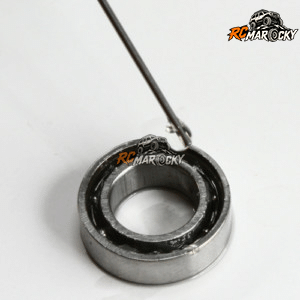

Once the bearing is clean and dry, it is time to lubricate it again.
Apply a small amount of light bearing oil.
Rotate the bearing gently so the oil can spread throughout the bearing.
Give the oil some time to penetrate and reach the moving components.
After approximately 20 minutes, wipe away any excess oil from the outside of the bearing.
There is no need to saturate the bearing.
A small amount of properly distributed oil is better than an oil-soaked bearing.
How do you know when a bearing needs replacing?
Cleaning also gives you an opportunity to check the actual condition of the bearing.
After cleaning and lubricating it, rotate the bearing by hand.
A bearing in good condition should rotate relatively smoothly, without significant roughness or binding.
Look out for signs such as:
- uneven rotation;
- grinding or rough noises;
- unusual resistance;
- excessive play;
- tight spots during rotation.
If the bearing still feels rough or difficult to rotate after cleaning and lubrication, it has probably reached the end of its useful life.
In that case, replacing it is better than trying to keep using it.
A simple test
You can also compare several bearings with each other.
Place the bearing on your finger or on a suitable shaft, then rotate it gently.
The goal isn’t necessarily to see which bearing spins the longest when unloaded. Instead, look for differences in how they feel and sound:
A smooth bearing should rotate without binding.
A worn bearing may produce noise, vibration or rough spots while rotating.
This simple comparison can be especially useful when several bearings have been removed from the same RC car at the same time.
A few good habits
Bearing maintenance doesn’t have to be complicated.
A few simple habits can already make a significant difference:
Avoid leaving bearings exposed to water or moisture.
Clean them when they become noisy or less smooth.
Use suitable bearing oil and apply it in moderation.
Avoid cleaning products that are too aggressive for the seals.
Check the bearing’s rotation after maintenance.
And most importantly, don’t try to save a bearing that is already heavily worn.
A bearing is a relatively simple component to replace. Once it is genuinely damaged, replacement is often more practical than further maintenance.
The key takeaway
A ball bearing works properly when it can rotate freely, cleanly and with appropriate lubrication.
The basic routine is simple:
1. Clean
2. Shake and soak
3. Dry properly
4. Re-lubricate
5. Check the rotation
If the bearing remains rough, noisy or excessively loose after these steps, it is time to replace it.
A little regular maintenance can help keep your drivetrain and other rotating components running smoothly, while preventing simple dirt buildup from turning a serviceable bearing into a replacement part.