
What Is RC Crawling? A Beginner’s Guide to Understanding the Hobby
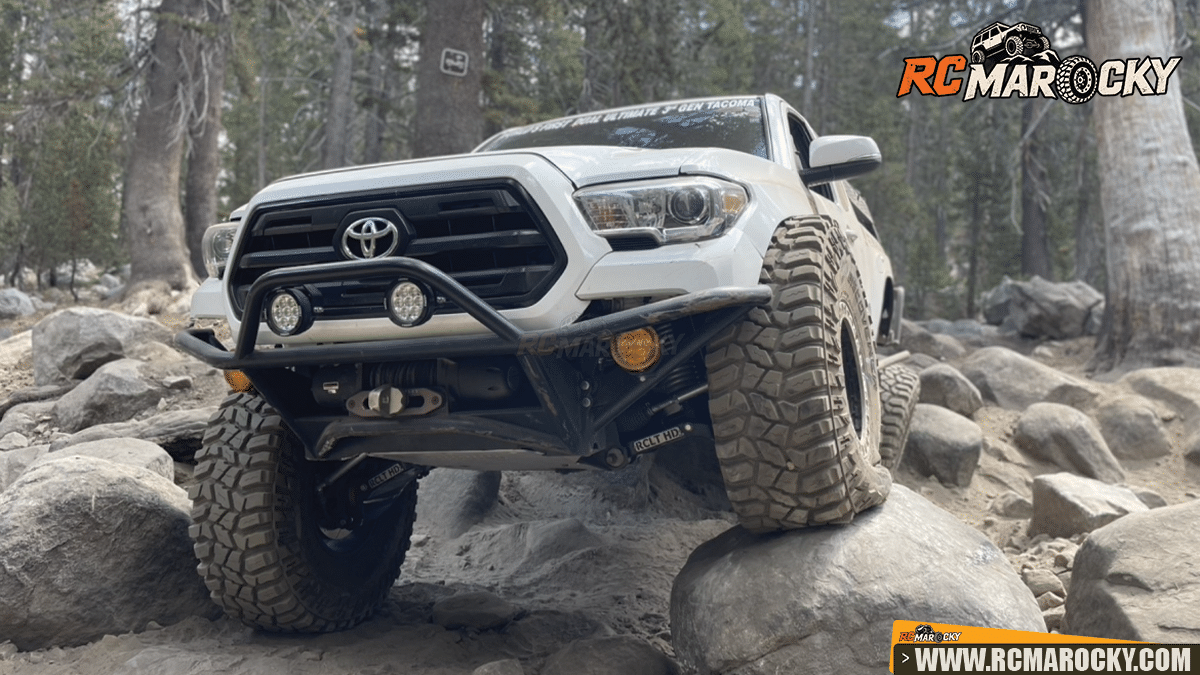
Not just a remote-controlled car. A machine to understand, a trail to conquer, and a hobby to grow into.
1. First Things First: What Is RC Crawling?
RC Crawling is a discipline of radio-controlled driving focused on slow, precise movement across challenging terrain.
Unlike an RC car designed to reach high speeds, a crawler is built to negotiate rocks, steep inclines, uneven ground, roots and other obstacles that require careful control rather than acceleration.
The objective isn’t simply to get from point A to point B. It’s to find the right line, manage the throttle, maintain traction and guide the vehicle through obstacles that can make even a short stretch of trail a genuine challenge.
Every rock presents a different problem. Every slope tests the vehicle’s balance. Sometimes, moving forward by just a few centimetres requires patience, technique and a better understanding of how the machine behaves.
And that’s where the fun begins.
RC Crawling is about control, capability and progression. The more you learn, the more you understand what your vehicle can do, what limits it, and how to get the best out of it.
2. Not All RC Cars Are Built for the Same Purpose
Radio-controlled vehicles come in many forms. Some are designed for speed, some for drifting, some for jumping and rough driving, while others are built to tackle difficult terrain at low speeds.
RC Crawling belongs to this last category, but it offers something more than simply driving slowly.
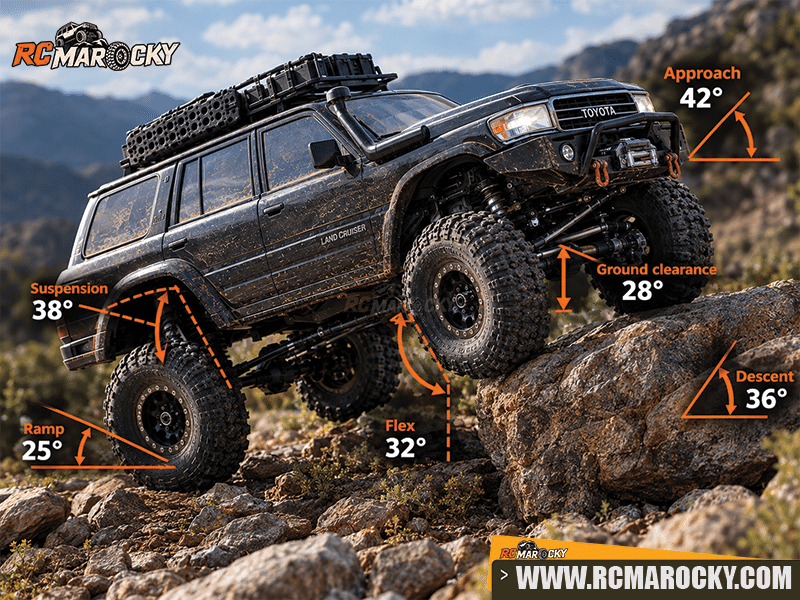
A dedicated crawler is designed around specific mechanical requirements: torque, traction, suspension movement, ground clearance and controlled power delivery.
Its architecture is intended to help the vehicle keep its wheels in contact with uneven terrain while maintaining stability and control.
Depending on the model, you may find features such as four-wheel drive, solid axles, articulated suspension, low gearing, grippy tires and a chassis designed for off-road obstacles.
These aren’t just technical details printed on a product page. They influence how the vehicle behaves on the trail.
A crawler isn’t necessarily the fastest RC car in the room. It’s the one you take outside when the ground itself becomes the challenge.
3. Toy-Grade vs. Hobby-Grade: What’s the Real Difference?
At first glance, many RC cars look similar. They have a body, four wheels, a motor and a remote control. But what sits underneath can make a significant difference to the ownership experience.
Toy-grade vehicles are generally designed to offer an accessible, ready-to-use experience. They’re often aimed at casual driving, with an emphasis on simplicity and affordability.
Hobby-grade RC vehicles are designed to be driven, maintained and, in many cases, repaired, adjusted and upgraded over time.
Here are some of the main differences to understand :
Repairability: Replace a Part, Not Necessarily the Whole Vehicle
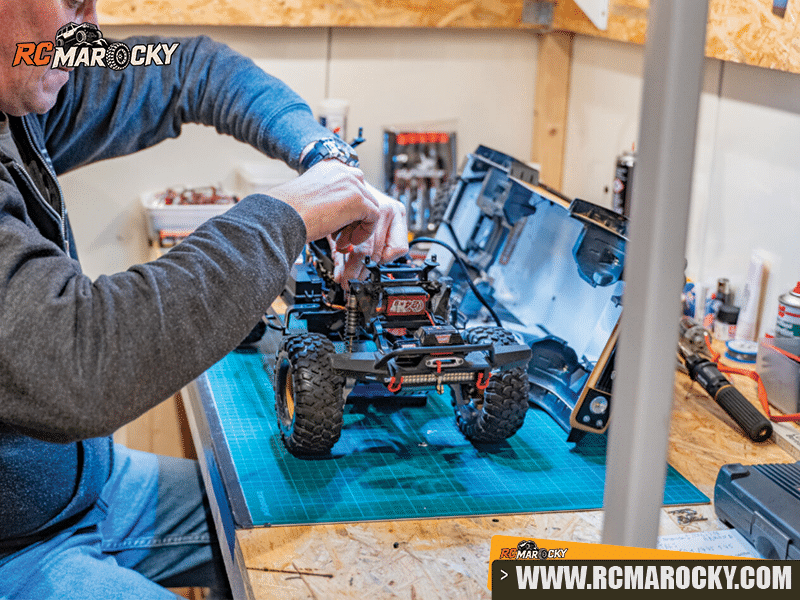
Imagine breaking a steering component after a difficult climb.
With a repairable hobby-grade platform, you can often identify the damaged part, source a replacement and get back on the trail without replacing the entire vehicle.
The same principle applies to many other components: suspension links, driveshafts, gears, axles, steering servos, motors and electronic equipment.
Availability varies by model, and not every component is individually replaceable on every vehicle. That’s why checking parts availability before purchasing is important.
But the underlying idea is simple: a mechanical problem doesn’t automatically mean the end of the vehicle.
You can repair it, learn from it and keep going.
Mechanical Architecture: There’s More Than Meets the Eye
A hobby-grade crawler isn’t just a body sitting on four wheels.
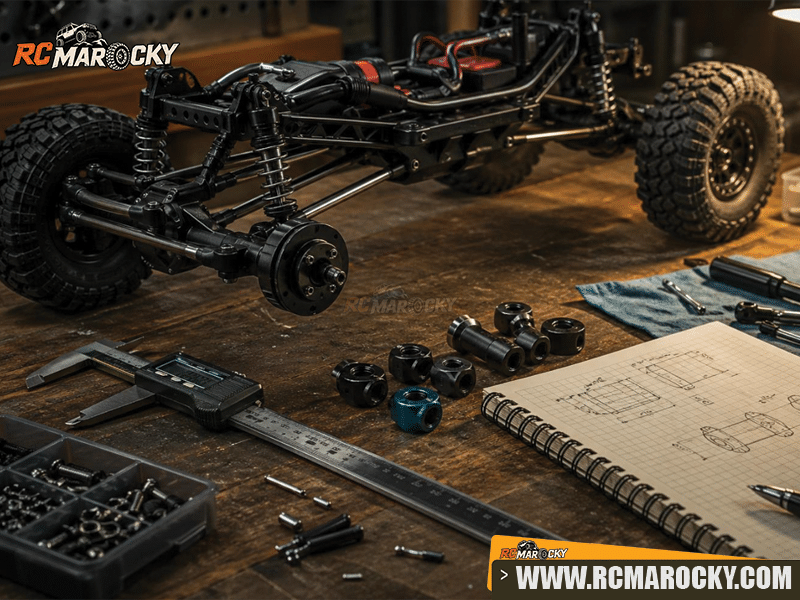
Underneath, its chassis, suspension, axles, transmission, drivetrain and electronics work together as a system.
The position of the battery, the geometry of the suspension, the gearing of the transmission and the type of tires all influence performance.
Understanding these elements allows you to make informed decisions instead of simply guessing which parts might improve your vehicle.
Over time, you begin to recognize why one crawler climbs more confidently, why another struggles on a steep slope, and how a seemingly small adjustment can change its behaviour.
That’s when driving becomes more interesting: you start understanding the engineering behind every movement.
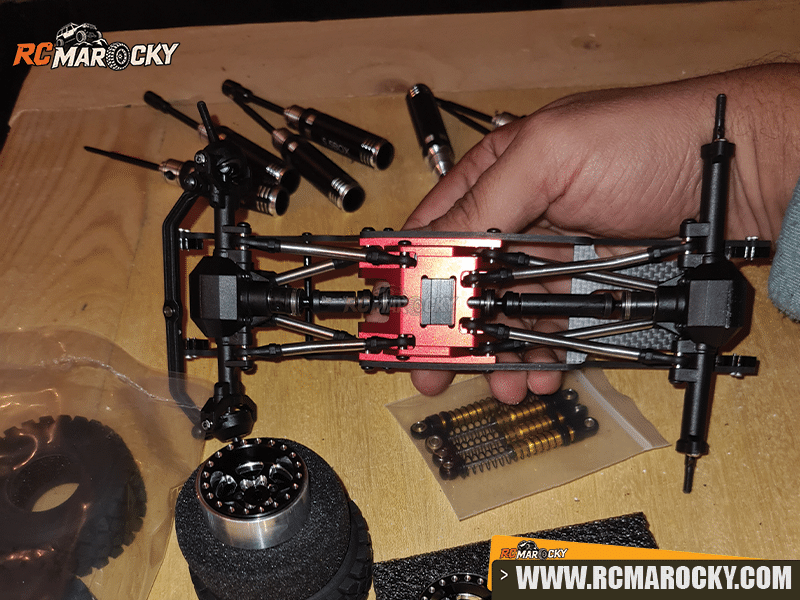
Evolution: Your Vehicle Can Grow With You
A hobby-grade crawler doesn’t have to remain exactly as it was on the day you bought it.
Depending on the platform, you can replace tires, adjust suspension settings, install different shocks, improve steering components, change gearing or upgrade the motor and electronic speed controller.
You might begin with a completely stock vehicle and gradually develop a setup suited to your driving style and the terrain you enjoy.
Some enthusiasts focus on trail reliability. Others pursue technical rock crawling, realistic scale details or carefully planned custom builds.
There’s no single correct way to approach the hobby.
The important part is that you can learn at your own pace and decide how far you want to take it.
Long-Term Value: More Than a Disposable Purchase
A well-maintained hobby-grade RC vehicle can remain useful long after your first outings. Repairability and parts support can help extend its service life, while compatible upgrades can give an existing platform a new purpose.
Some models also retain meaningful resale value, particularly when they have a desirable platform, documented maintenance, available spare parts and a good overall condition.
Resale value is never guaranteed. It depends on the model, its condition, the market and the availability of replacements.
Still, a repairable and upgradeable vehicle offers something a disposable purchase generally cannot: the opportunity to maintain, improve and potentially resell a machine rather than simply discard it when something breaks or your interests change.
The real value isn’t just what you buy today. It’s what you can continue to do with it tomorrow.
4. Why Crawling Is About More Than Driving
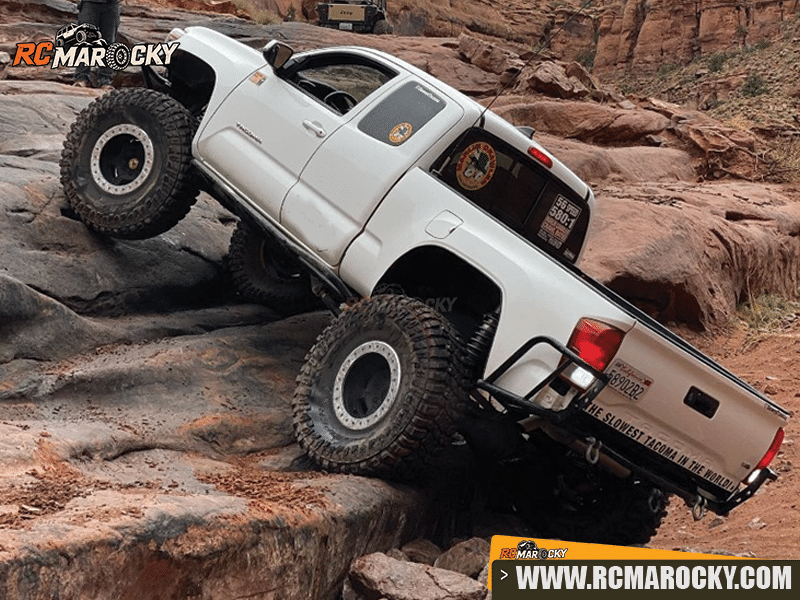
One of the most rewarding aspects of RC Crawling is that the driver matters just as much as the machine.
You can own a capable crawler and still struggle on a difficult obstacle. You can also improve your driving skills and discover that your existing vehicle is capable of much more than you initially thought.
You learn to read the terrain before committing to a line.
You learn to apply throttle progressively rather than simply squeezing the trigger.
You begin to understand traction, wheel placement, weight transfer and the importance of keeping the vehicle balanced.
Sometimes, the best approach is to take a different line. Sometimes, you need to reverse, reposition a wheel and try again.
And sometimes, you discover that your vehicle needs a mechanical adjustment rather than more power.
Every outing becomes an opportunity to learn something new.
There is satisfaction in clearing an obstacle that defeated you the previous time, especially when you know that the result came from better technique rather than simply buying a more expensive machine.
5. What Does “Scale RC” Mean?
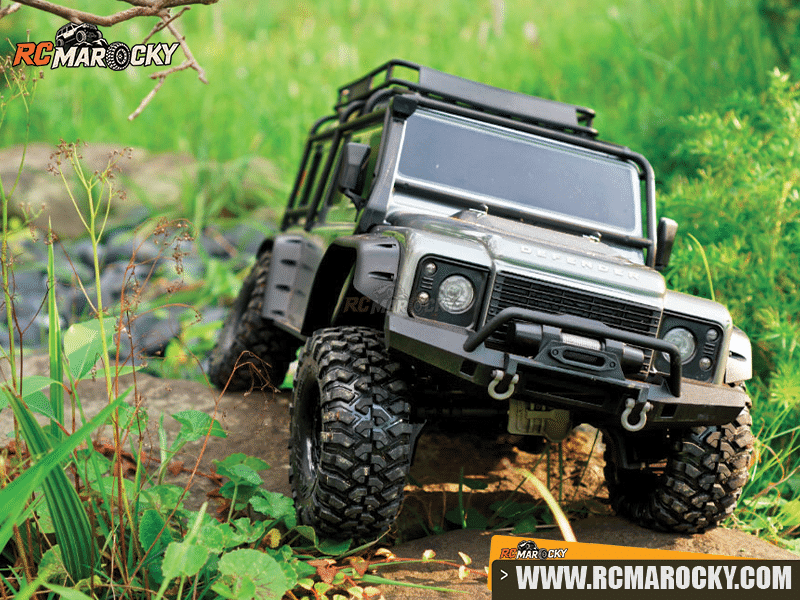
You’ll often hear the word scale when exploring the world of RC Crawling.
Scale RC refers to radio-controlled vehicles designed to reproduce the appearance and, to varying degrees, the proportions and details of real vehicles.
A 1:10 scale model, for example, is nominally one-tenth the size of its full-size counterpart. Actual dimensions vary according to the original vehicle, the model’s design and how closely it follows the stated scale.
Scale enthusiasts may pay attention to body proportions, wheel and tire combinations, bumpers, mirrors, lighting, recovery equipment, interiors and other details that make a model look like a miniature version of a real off-road vehicle.
But scale isn’t only about appearance.
For many enthusiasts, the appeal lies in combining realistic design with the ability to drive through real outdoor terrain.
A carefully detailed rig can look at home on a miniature trail while still requiring genuine driving skill to negotiate rocks and steep inclines.
Some crawlers prioritize realism; others emphasize technical capability. Many enthusiasts enjoy a balance of both.
That’s one of the reasons the hobby offers so many different directions to explore.
6. Is RC Crawling an Expensive Hobby?
Like many hobbies, RC Crawling can be as simple or as involved as you choose to make it.
You don’t need to start with an expensive custom build, a workshop full of tools or a collection of upgraded components.
A suitable ready-to-run (RTR) crawler can be enough to begin. RTR generally means the vehicle comes assembled with the main driving electronics installed, although a compatible battery, charger or other items may still need to be purchased separately.
From there, you can explore the hobby gradually.
Learn to drive the vehicle in its original configuration. Discover what you enjoy. Understand its strengths and limitations before deciding whether an upgrade is worthwhile.
It’s easy to spend money on parts without knowing whether they solve a real problem. Learning first can help you avoid unnecessary purchases and build a setup that makes sense for your needs.
The objective isn’t to own the most expensive crawler.
It’s to understand your machine, get the most out of it and enjoy the experience.
7. Where Should a Complete Beginner Start?

If you’re discovering RC Crawling for the first time, start with the fundamentals.
First, understand the vehicle. Learn the basic functions of the chassis, motor, transmission, suspension, steering and electronics.
Then, learn to drive. Begin on manageable terrain and practice smooth throttle control, steering and line selection before attempting difficult obstacles.
Next, observe how the vehicle behaves. Notice where it loses traction, when it becomes unstable and how its tires and suspension react to the terrain.
Finally, learn before upgrading. When you understand what limits your vehicle, you can make more informed decisions about repairs, adjustments and improvements.
You don’t need to know everything before your first drive. In fact, discovering how the different parts work together is one of the most enjoyable aspects of the hobby.
Start simple. Stay curious. Build your knowledge one trail at a time.
8. Welcome to the World of RC Crawling
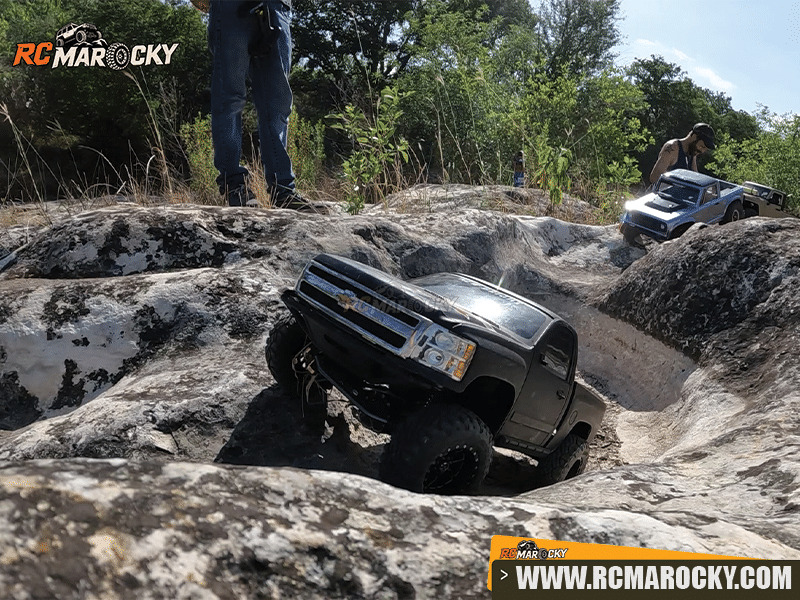
RC Crawling brings together driving, mechanical understanding, outdoor exploration, customization and the satisfaction of overcoming a challenge.
For some people, it’s about realistic miniature off-road vehicles. For others, it’s about technical performance, suspension geometry, carefully chosen components or building a machine from the ground up.
For many, it’s a combination of all these things.
There is no requirement to become a mechanic, spend a fortune or build the ultimate crawler to enjoy it. You can simply start with a capable vehicle, learn how it works and discover what interests you along the way.
The deeper you go, the more there is to explore.
And the next obstacle is always waiting.
BUILD. CRAWL. ROCK.
RC Marocky — Built for the Adventure.